
Hello, friends! I am so glad you’re here, though I wish the circumstances were a little less… dramatic. If you caught Part 1 of our Longarm Series (the one where I had a literal machine emergency!), then you know my heart was in my throat last week.
There is a specific kind of silence that falls over a craft room when a machine stops working. It’s not the peaceful silence of a finished project; it’s the heavy, echoing silence of a deadline looming and a piece of equipment that cost as much as a small car suddenly deciding it needs a "personal day."
In today’s post, we’re going behind the scenes of what actually happened, how I diagnosed the problem, and: most importantly: how I kept my cool when all I wanted to do was cry over my unfinished Big Spools Quilt. Grab a cup of tea, and let’s talk shop!
The "Clunk" Heard 'Round the Studio
It happened on a Tuesday morning. I was in a groove, the rhythm of the longarm was steady, and I was feeling like a total pro. Then, it happened. Clunk.
It wasn’t just a broken thread or a bobbin running out. It was a mechanical sound: a heavy, metallic skip that immediately made my stomach drop. I stopped the machine instantly, but the damage was done. The needle was stuck, the thread was shredded, and my Handi Quilter was officially out of commission.
If you’ve ever experienced a "machine emergency," you know that first 10/10 urgency feeling. Your brain starts racing through all the "what ifs." What if it’s the motor? What if I have to ship it back? What if I can never finish this quilt?!

Step 1: Breathe and Step Away
The very first thing I did was… nothing. I stepped away from the machine. When we are frustrated, we tend to poke and prod at things, which usually makes a mechanical issue worse. I took a deep breath, walked into the kitchen, and reminded myself that this is just part of the journey of being a longarm owner.
High-end equipment is amazing, but it is also complex. Just like a car needs an oil change or a tune-up, our longarms occasionally need some professional TLC. Once I felt calm, I went back to my craft room to start the troubleshooting process.
Identifying the Culprit: Timing Issues
After clearing out the bird's nest of thread and checking the bobbin area, I suspected the issue was timing.
For those of you who might be new to the world of longarms, "timing" refers to the precise relationship between your needle and the hook assembly. If they aren't perfectly synchronized, the hook won't catch the thread loop from the needle, resulting in skipped stitches, shredded thread, or: in my case: a complete mechanical jam.
Is it really a timing issue?
Before you start panicking and calling a technician, you have to rule out the simple things. Here is my "Emergency Checklist" for whenever my machine starts acting up:
- The Needle: Is it inserted correctly? Is it the right size for the thread? Is it slightly bent? (Change it anyway, just to be sure!)
- The Thread Path: Did a piece of lint get caught in the tension discs? Is the thread caught on the spool?
- The Bobbin: Is the bobbin case clean? Is there a tiny piece of thread stuck under the tension spring?
- The Plate: Did I hit the needle plate? Are there any burrs or nicks on the metal that are catching the thread?
In my case, I had hit a bulky seam at a high speed, which was enough to "knock" the hook out of alignment.
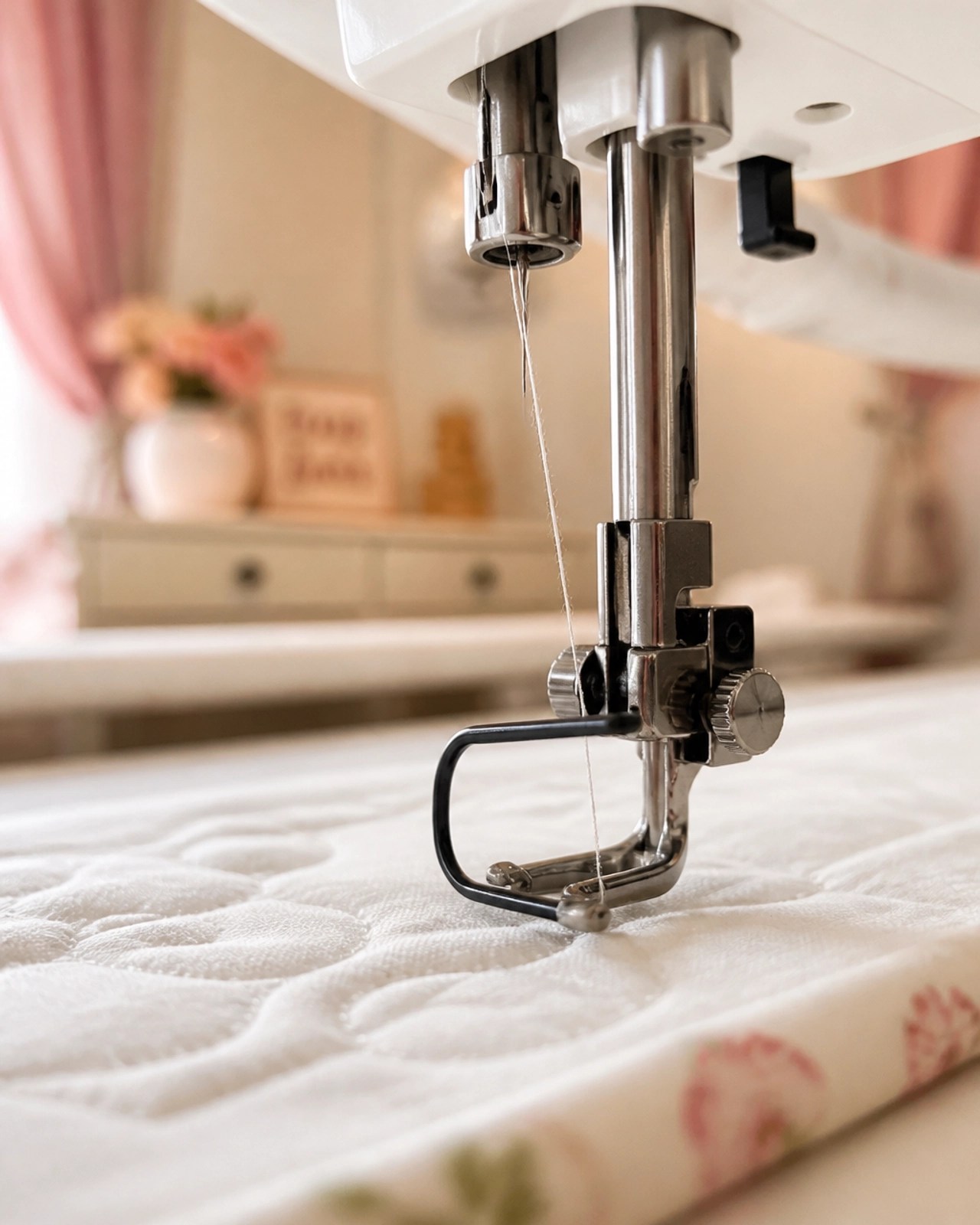
The Handwheel Test (Educational Moment!)
If you suspect your timing is off, there is a non-invasive way to check it. I call it the Handwheel Test.
Unthread your machine and remove the bobbin. Turn your handwheel toward you slowly until the needle reaches its lowest point. As the needle begins to rise, watch the hook point come around behind the needle.
The hook should pass directly behind the "scarf" (the little indentation) of the needle, just above the eye. If it’s passing way above or way below, or if it’s hitting the needle, your timing is definitely off. Mine was a good 1/8th of an inch away from where it should have been. Ouch.
The Frustration of Downtime
I’m going to be real with you: the downtime is the hardest part. As creators, our machines are our voices. When they are silent, it feels like our creativity is on hold. I had a full schedule of tutorials to film and projects to finish for the Crafty Author Clubhouse™.
But here is the thing: You cannot rush a mechanical fix.
Instead of dwelling on the broken machine, I used the time to organize my scrap bins and plan some upcoming scrap quilt series projects. I also spent some time in our community, chatting with other makers who have been through the same thing.
"Your worth as a creator is not tied to how fast your machine runs. Sometimes, the 'pause' is where the best new ideas are born." : Anisa, The Crafty Author
Calling in the Pros
While some people are comfortable adjusting their own timing, I am a firm believer in calling a certified technician for major mechanical shifts. Handi Quilter machines are precision instruments, and I didn't want to risk voiding my warranty or causing further damage.
I called my local tech, and we had a great chat. He walked me through some basic maintenance over the phone to make sure nothing else was broken, and we got an appointment on the books.
Pro Tip: Always keep your technician’s number saved in your phone! You don’t want to be hunting for a business card when your machine is in "Emergency Mode."

Lessons Learned: Maintenance is Key
This experience was a huge reminder that maintenance isn't just "nice to do": it's essential. To keep your longarm happy, remember to:
- Oil it often: Every bobbin change is a good rule of thumb for many machines.
- Clean the lint: A tiny piece of lint can throw off your tension or hide a bigger problem.
- Listen to the sound: You know your machine’s "song." If the pitch changes or you hear a new click, stop and investigate immediately.
What’s Next?
The good news? My tech is coming, and I am feeling much more hopeful. In Part 3 of this series, I’ll be sharing the actual repair process and some "hacks" for what to do when you're waiting for your machine to come back to life.
Are you joining the madness? Have you ever had a major machine breakdown? Share your stories in the comments below: I’d love to know I’m not alone in this!
If you want more support, step-by-step guidance, and a community that truly "gets it," I invite you to join us in The Crafty Author Clubhouse™. It’s where we turn overwhelm into "I can do this!" Every single day.
Stay creative, friends!
Warmly,
Anisa
Shop Our Partners
| Partner | Shop |
|---|---|
| Missouri Star Quilt Company |  |
| AccuQuilt |  |
| HTVRONT |  |
| Sewing Machines Plus |  |
| Fat Quarter Shop |  |
| Shop My Amazon Store |  |
| Ricoma | [ ](Shop Now placeholder) ](Shop Now placeholder) |
Affiliate disclosure: This page contains affiliate links. If you shop through these links, I may earn a small commission at no extra cost to you. Thank you for supporting The Crafty Author!