• Skip to primary navigation
  • Skip to main content
  • Skip to primary sidebar

The Crafty Author™

Crafting & Quilting Made Fun and Easy!

  • HOME
  • BLOG
  • QUILT SERIES
    • BLOCK OF THE MONTH
      • BLOCK OF THE MONTH- JANUARY
      • BLOCK OF THE MONTH- FEBRUARY
      • BLOCK OF THE MONTH- MARCH
      • BLOCK OF THE MONTH- APRIL
      • QUILT BLOCK OF THE MONTH- MAY
      • BLOCK OF THE MONTH – JUNE
      • BLOCK OF THE MONTH – JULY
      • BLOCK OF THE MONTH – AUGUST
      • BLOCK OF THE MONTH: SEPTEMBER
      • BLOCK OF THE MONTH: SEPTEMBER MODIFIED QUILT BLOCK
      • BLOCK OF THE MONTH – OCTOBER
      • BLOCK OF THE MONTH- NOVEMBER
      • BLOCK OF THE MONTH- DECEMBER
    • SCRAPTASTIC SCRAP QUILT
      • What is Scrap Quilting?
      • SCRAPTASTIC SCRAP QUILT 1
      • SCRAPTASTIC SCRAP QUILT 2
      • SCRAPTASTIC SCRAP QUILT 3
      • SCRAPTASTIC SCRAP QUILT 4
      • SCRAPTASTIC SCRAP QUILT 5
      • SCRAPTASTIC SCRAP QUILT 6
      • SCRAPTASTIC SCRAP QUILT 7
      • SCRAPTASTIC SCRAP QUILT 8
      • SCRAPTASTIC SCRAP QUILT #9
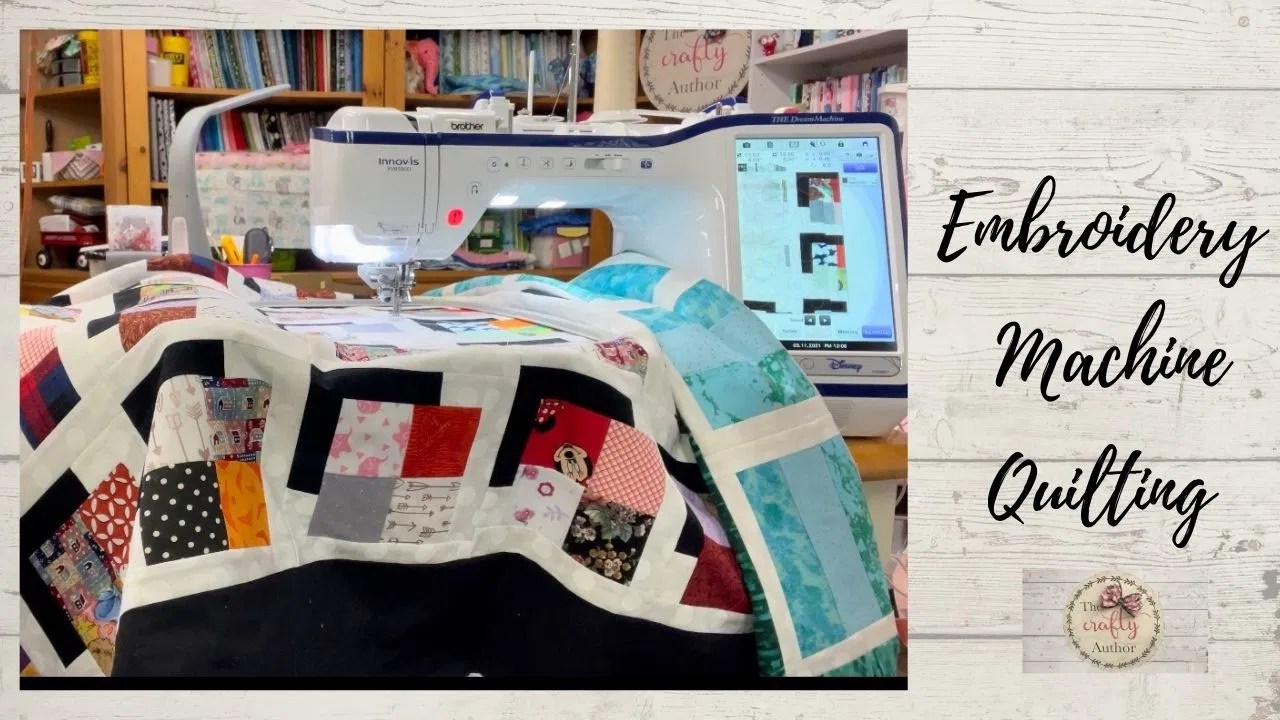
      • QUILTING EDGE TO EDGE ON YOUR EMBROIDERY MACHINE PART 1
  • THE CRAFTY AUTHOR™ CLUBHOUSE
  • SHOP THE QUILTED TEE

BLOG

Quick & Easy Snappy Pouch: A Missouri Star Quilt Co Project Tutorial

May 17, 2026 By The Crafty Author

Quick & Easy Snappy Pouch Tutorial

Hello, friends! I am so thrilled you’ve stopped by the blog today. If you’ve been following along with me for a while, you know that there is nothing I love more than a project that is both practical and practically instant. There is something so incredibly satisfying about sitting down with a small stack of fabric and getting up an hour later with a finished, functional gift.

Today, we are talking about one of my absolute favorites from our friends over at Missouri Star Quilt Co: the Snappy Pouch!

This post is a special feature for our upcoming Sunday long-form video on May 17, 2026. I wanted to give you a head start on the details so you can have your fabric pulled and your sewing machine ready to go when the video drops. Trust me, once you make one of these, you’re going to want to make ten. Are you joining the madness? I certainly hope so!

What is a Snappy Pouch?

If you haven't seen these before, prepare to be delighted. A Snappy Pouch is a small fabric bag that uses a very clever secret ingredient to stay closed: metal measuring tape!

Yes, you read that right. By using short lengths of a standard hardware store tape measure, you create a "snap" closure that stays shut on its own but pops open with a gentle squeeze. It is a fantastic way to store earbuds, jewelry, sewing notions, or even those loose coins that always seem to disappear into the bottom of your handbag.
A beautiful collection of handmade snappy pouches in floral fabrics

Why This Project is a Must-Try

As a mentor in this creative world, I am always looking for ways to help you build your confidence. Sometimes we get bogged down in massive, queen-sized quilts that take months (or years!) to finish. While those are beautiful, we all need those "quick wins" to keep our creative spirits high.

The Snappy Pouch is the ultimate quick win. It’s a great project for using up those precious fabric scraps you can’t bear to throw away, and it teaches you a bit about construction and "thinking outside the box" when it comes to materials.

"Quilting is about more than just blankets; it’s about the joy of creating something useful with your own two hands."

Materials You’ll Need

Before you dive in, let’s make sure you have your supplies gathered. Here is what I recommend for the best results:

  • Fabric: You’ll need two coordinating fabrics, one for the outside and one for the lining. Fat quarters are perfect for this!
  • Interfacing: To give the pouch a bit of structure, I love using a medium-weight fusible interfacing.
  • A Metal Tape Measure: A cheap 1-inch wide tape measure from the hardware store works best. (Pro tip: Wear gloves when cutting the tape, it can be sharp!)
  • Electrical Tape: To cover the cut ends of the metal tape so they don't poke through your fabric.
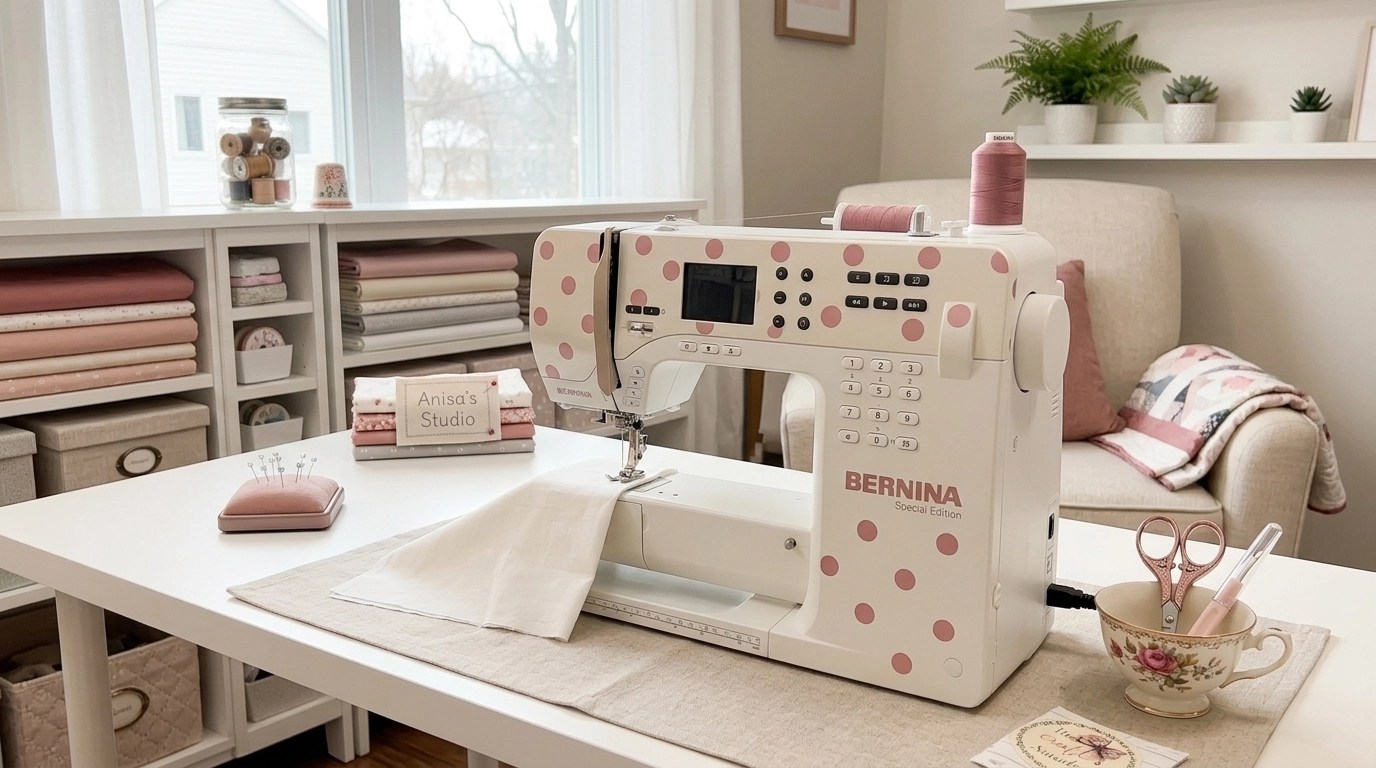
  • Your Sewing Machine: I’ll be using my trusty Bernina for the tutorial, but any machine that can handle a straight stitch will work beautifully.
The Bernina sewing machine ready for a new project

Step-by-Step Guidance (The Penny Way!)

While the full video tutorial will go live this Sunday, here is a little roadmap of the process to get your brain in "making mode."

1. Prep Your Fabric

Cut your exterior, lining, and interfacing to the size specified in the pattern. I like to fuse my interfacing to the wrong side of the exterior fabric first. It makes everything so much easier to handle. Isn't it fresh when the fabric feels crisp and ready to work?

2. The "Snap" Secret

This is the part that usually makes people nervous, but don't be! You’re going to cut two pieces of the metal tape measure. Important safety note: Use old scissors or wire cutters, don't use your good fabric shears! Once cut, wrap the ends in electrical tape. This is a teaching moment: always protect your stitches (and your fingers) from sharp edges!

3. Construction

You’ll sew your exterior and lining pieces together, leaving a casing for the tape measure pieces to slide into. It’s like making a tiny curtain rod pocket.

4. The Final Assembly

Once the "snaps" are inside, you’ll sew the side seams. Because we are working with a small space, I recommend using a walking foot if you have one, or just taking it nice and slow.

Get the Pattern & A Special Discount!

I am so happy to share that Missouri Star has provided a free pattern for this project. You can grab it right here:

Download the Free Snappy Pouch Pattern Here

But wait, it gets better! Because I love my Crafty Author community so much, there is a special discount that applies automatically at checkout when you use that link.

Please note: This discount is limited to the first 200 uses (one per person), so if you’ve been eyeing some new fabric or tools to go along with your pouch project, don't wait!

Sewing process showing fabric being fed through a machine

Personal Tips for Success

I’ve made dozens of these, and here are a few things I’ve learned along the way:

  • Fabric Choice: Choose a print that isn't too directional if it's your first time. It removes the stress of making sure the "birds aren't upside down" on one side of the pouch.
  • The Squeeze Test: Before you finish the final side seams, slide your tape measure pieces in and give them a squeeze. Make sure they are oriented the right way (the curve of the tape should face inward) so the pouch snaps shut properly.
  • Batch Sewing: Once you have the hang of it, cut out five or six at once. You can chain-piece these just like quilt blocks!

Join the Community

One of the best parts of being "The Crafty Author" is seeing what you create. When you finish your Snappy Pouch, please share it!

Also, a huge shoutout to the team at Missouri Star Quilt Co. They are such a light in the quilting community. Be sure to follow @missouriquiltco on social media for even more inspiration. They are constantly coming up with brilliant ways to make our lives more creative and fun.

If you’re looking for even more support, don't forget about The Crafty Author Clubhouse™. It’s our little corner of the internet where we do exclusive sew-alongs and dive deeper into techniques just like this one. We would love to have you!

Final Thoughts

I hope you’re as excited for Sunday’s video as I am. Projects like the Snappy Pouch remind me why I started sewing 30 years ago. It’s not just about the end product; it’s about the peace and joy we find in the process.

So, go ahead: click that link, get your pattern, and let’s get ready to sew something wonderful together.

Stay crafty, friends!

Anisa
Owner, The Crafty Author


Shop Our Partners

I only recommend products and shops that I truly love and use in my own studio. Support these wonderful businesses by shopping through the links below!

Partner Image Shop Link
Missouri Star Quilt Company Missouri Star Shop Now
AccuQuilt AccuQuilt Shop Now
HTVRONT HTVRONT Shop Now
Sewing Machines Plus Sewing Machines Plus Shop Now
Fat Quarter Shop Fat Quarter Shop Shop Now
Shop My Amazon Store Amazon Shop Now
Ricoma Ricoma Shop Now

Affiliate disclosure: This page contains affiliate links. If you shop through these links, I may earn a small commission at no extra cost to you. Thank you for supporting The Crafty Author!

Modern Quilt Patterns: 5 Designs That Will Make You Look Like a Pro

May 15, 2026 By The Crafty Author

Modern geometric quilt design with bold negative space in aqua, coral, purple, mint, cream, and black accents

Hello there, friends! I am so thrilled you’re here today because we are diving into one of my absolute favorite topics: modern quilt patterns. If you’ve been following along with my journey here at The Crafty Author, you know that while I have a deep, deep love for the traditional blocks we all grew up with, there is something just so fresh and exciting about the modern quilting movement.

I remember when I first started quilting over 30 years ago. Everything was very structured, very traditional, and: let’s be honest: sometimes a little bit intimidating for a beginner! But one of the things I love most about teaching modern quilting is helping the modern maker take those complex-looking techniques and break them down into simple, approachable steps. The modern quilting world has opened up so many doors. It’s all about breaking the rules (or at least bending them a little!) and creating something that feels uniquely you.

Are you ready to stop feeling like a "newbie" and start making quilts that look like they belong in a high-end boutique? I promise you, with these five designs, you’re going to look like an absolute pro, even if you just finished your very first project last week!

What Exactly Makes a Quilt "Modern"?

Before we get into the patterns, let's talk about the "vibe." When I say "modern quilt patterns," I’m usually talking about a few specific design elements that set them apart from the heirlooms our grandmothers made.

  • Minimalism: This is the "less is more" philosophy. Instead of every inch of the fabric being covered in busy patterns, modern quilts often use "negative space" (usually a solid neutral background) to let the design breathe.
  • Bold Colors: Forget the muted calicos of the 80s! We’re talking vibrant teals, deep navies, mustard yellows, and even crisp blacks and whites.
  • Geometric Shapes: Think big, bold lines, triangles, and asymmetrical layouts.
  • Non-Traditional Layouts: Sometimes we leave the borders off or put the "star" of the show in the bottom corner instead of right in the middle.

The best part? These elements actually make the quilting process easier for beginners. Because modern designs often rely on larger pieces of fabric and simpler shapes, you spend less time fussing over tiny corners and more time actually finishing your quilt. That is exactly why I love helping the modern maker turn complex-looking ideas into simple, doable steps. How satisfying is that?


1. The Modern Log Cabin: A Fresh Twist on a Classic

Modern sampler quilt top in aqua, coral, purple, and mint

The Log Cabin is probably the most iconic quilt block in history, but have you ever tried a modern version?
By using asymmetrical "logs" or placing your blocks in a non-traditional way, you create a look that is totally high-fashion.

I love this design because it’s incredibly forgiving. If your strips aren't perfectly uniform, it often just adds to the "improv" feel of a modern quilt. For a pro look, try using a solid cream background and then popping in just one or two blocks with a really vibrant, floral print. It’s a great way to showcase those "favorite" fabrics you've been saving in your stash! If you're looking for a great place to start with strip-style piecing, my Strip Quilt Series is a wonderful resource for mastering these techniques.

2. The Ninja Star: Bold, Sharp, and Stunning

The Ninja Star (or a modern take on the Friendship Star) is all about those clean, sharp lines. What makes it look "pro" is the use of high-contrast colors. Imagine a crisp white background with stars made of bold navy and bright yellow. It practically jumps off the bed!

The secret to looking like a professional here is in the pressing. I always tell my students: "Press like your project depends on it!" Using a good heat press or a heavy steam iron makes those seams lay perfectly flat, which is the hallmark of a professional quilter.

3. The Sparkle Quilt: Modern Geometric Lines

Modern sampler quilt top in aqua, coral, purple, and mint

If you love a good zig-zag but want something more sophisticated than a standard chevron, the Sparkle pattern is for you.
It uses vertical rows to create a shimmering, geometric effect. The reason this works so well for beginners is that it eliminates those pesky "Y-seams" that can be so frustrating when you’re just starting out.

To make this design look truly modern, try using an "ombré" effect. Start with a light color at the top and gradually work your way down to a darker shade of the same hue. It’s an easy trick that makes everyone think you spent weeks planning out the color theory!

4. The Quarter Log Cabin: Minimalist Magic

Modern sampler quilt top in aqua, coral, purple, and mint

If you want a quilt that looks like it belongs in a modern art gallery, the Quarter Log Cabin is your best friend.
Instead of building the "logs" all the way around a center square, you only build them on two sides.

This creates a beautiful, sweeping motion across the quilt top. I highly recommend using just three different fabrics for this: perhaps two solids and one bold geometric print. Keeping the color palette limited is a pro secret for making a quilt look intentional and expensive. I've used similar techniques in my Big Spools Quilt project, which is another fantastic example of how simple shapes can make a huge impact.

5. The Perfect Placement: Showcasing Your Style

Modern sampler quilt top in aqua, coral, purple, and mint

Sometimes, the most "pro" thing you can do is let the fabric do the work for you.
The "Perfect Placement" style is a highly repetitive pattern: think simple squares or rectangles: that is designed specifically to show off a specific fabric collection.

This is perfect for those "fussy cutting" moments where you want to highlight a specific character or floral motif in the center of every block. By framing these beautiful prints with a solid border, you create a clean, modern grid that looks sophisticated and organized.


My Top Tips for Modern Quilting Success

Are you feeling inspired yet? I hope so! Before you run off to your sewing room, let me share a few "mentor" tips to help you get that professional finish:

  1. Don't Overthink Your Colors: If you’re nervous about picking colors, look at the "selvage" of your favorite fabric (that’s the edge with the little color dots). The designers have already done the hard work of picking colors that match: just follow their lead!
  2. Invest in Good Tools: You don't need everything in the store, but a sharp rotary cutter and a clear acrylic ruler will change your life. Trust me, straight cuts are 90% of the battle.
  3. Embrace the Imperfections: Here is a little secret… even after 30 years, my points don't always match perfectly. And you know what? Once the quilt is washed and crinkly and being used to snuggle on the couch, no one will ever notice!
  4. Join a Community: Quilting is so much more fun when you have friends to cheer you on. If you want more hands-on help, come join us over at The Crafty Author Clubhouse™ (COMING SOON!). We love seeing what everyone is working on!

"A quilt isn't just a blanket; it's a hug you can keep. Modern or traditional, the love you stitch into it is what truly matters."

Shop Our Partners

Click the images below to shop my favorite fabrics and tools from the partners I trust!

Missouri Star Quilt Company


I am so excited to see which of these modern patterns you decide to try first! Whether you go for the bold Ninja Stars or the minimalist Quarter Log Cabin, just remember to have fun with it. There are no "quilt police" here: just a community of makers who can't wait to see your creativity shine.

Are you joining the modern quilting madness with me? Leave a comment below and let me know which design is calling your name!

Happy stitching,

Anisa
Owner, The Crafty Author

Longarm Machine Emergency! This Happened to My Handi Quilter

May 15, 2026 By The Crafty Author

A quilt loaded on the longarm frame in the studio.

Hello, friends! Welcome back to the studio.
If you’ve been following along with my latest projects, you know how much I absolutely adore my quilting space. It’s usually my happy place, filled with the hum of machines and the vibrant colors of new fabrics. But today, I have to get real with you about something that every longarm owner dreads: a machine emergency.

I’m currently navigating a bit of a "quilt crisis" with my Handi Quilter Simply 16. It’s one of those moments where you have to take a deep breath, remind yourself why you love this craft, and figure out a plan B.

Are you ready to join me in the madness? Let’s talk about what happened and how I’m planning to get back to the stitching I love!

Why I Adore My Longarm (When It’s Working!)

Before we dive into the "surgery" part of today's post, I want to share why I fell in love with longarming in the first place. For those of you who have been quilting on a domestic machine, you know the struggle of the "quilt sandwich."

Owning a longarm machine like my Simply 16 completely changed the game for me. Here are my top three favorite things about it:

  1. The Sandwiching Process: There is no spray basting and no pins! I simply roll everything, the backing, the batting, and the top, onto the frame. It is a massive time-saver and so much easier on the back.
  2. ProStitcher Premium: This is the "brain" of the operation. I can program a design, and the machine executes it with stunning precision. It makes professional-level results accessible to everyone.
  3. The Finished Product: There is nothing quite like the feeling of pulling a finished quilt off that frame. It’s the ultimate "ta-da!" moment.

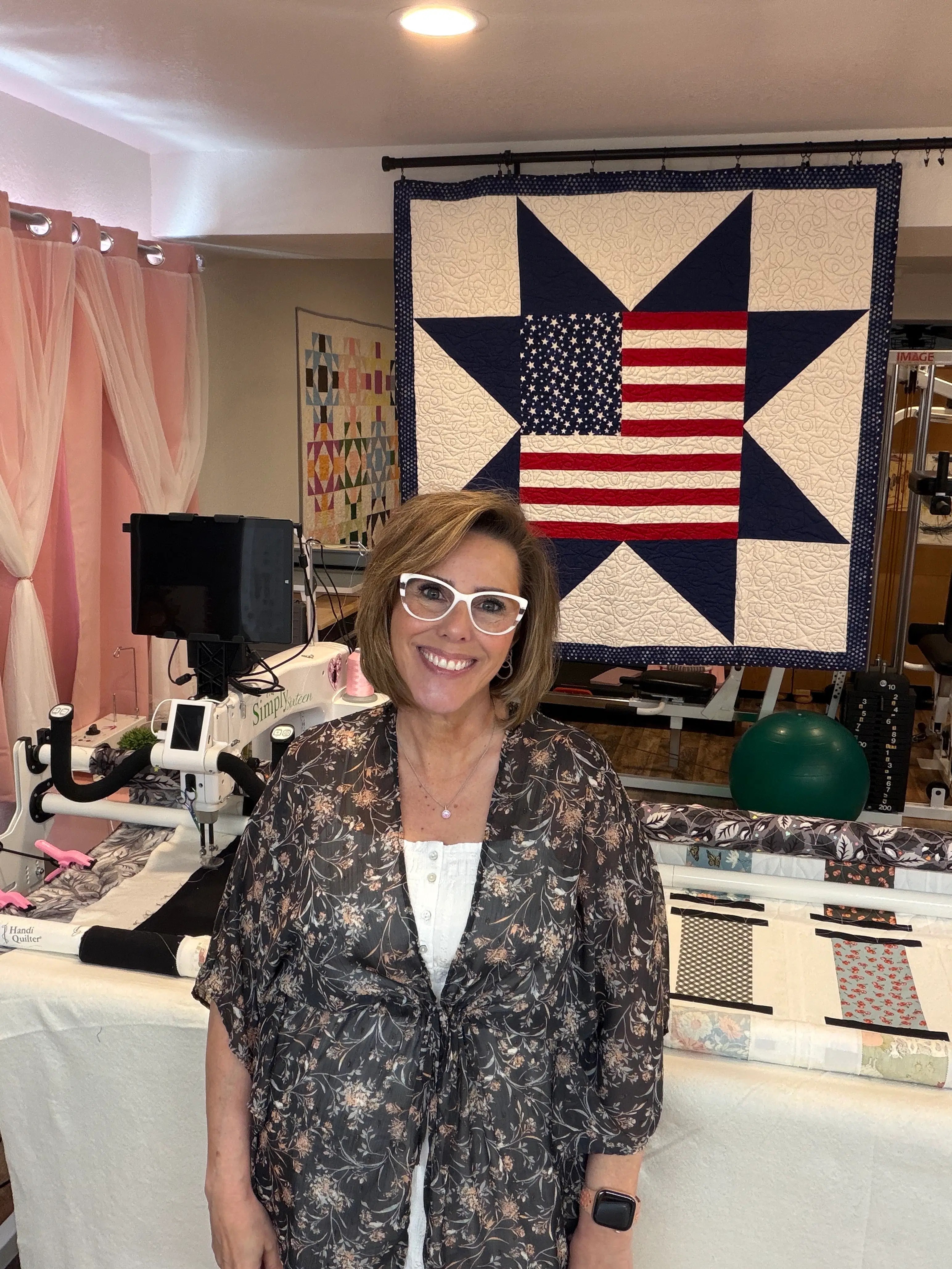
Anisa smiling beside her Handi Quilter in the studio.

A quilt loaded on the longarm frame in the studio.

The Breakdown: What Went Wrong?

Now, let's talk about the elephant in the room. My $25,000 machine decided to stop behaving. It started when a thread broke during a filming session (you might have seen that in one of my recent shorts!). After I re-threaded, the machine just… quit.

After some troubleshooting with the wonderful team at Handi Quilter, we identified the culprit: a faulty encoder in the carriage.

The encoder is the little "child" that communicates with the machine so it knows where it is on the frame. Without it, the machine can't connect to the carriage, and the ProStitcher can't do its job. It’s incredibly frustrating, especially as a business owner, because when the machine goes down, production stops. I'm currently about three quilts behind!

Quilt Surgery: The Hardest Part

The "emergency" isn't just the broken part; it’s the logistics of the repair. Because the encoder is located in the carriage underneath the machine, we have to perform what I call "quilt surgery."

In order to reach the problem area, all of the poles on my 10-foot frame have to come off. That means my current project, the Big Spools Quilt, has to be removed mid-quilting.

"When it rains, it pours. This quilt is holding up the whole process for everyone!"

The real challenge will be putting it back on. Half of it is already quilted and sandwiched, while the other half will be "loosey-goosey." Trying to realign everything so the patterns match up perfectly is going to be a journey. We might laugh, we might cry, but I’m going to take you along for the ride!

A close-up of colorful quilt blocks that inspire future projects.

The Repair Plan (Wish Us Luck!)

So, what’s the plan? Well, I have the new part in hand! Now comes the big decision: do I wait for a professional technician to come out, or do I trust a DIY approach?

My husband, who is incredibly smart (though I'll admit his patience for tiny machine parts can be thin!), wants to try and install it himself. We’re going to give it a go! I’ll be recording the process so you can see exactly what goes into a longarm repair. Send us all the positive thoughts and good vibes, we're going to need them!

Looking Ahead: Future Projects

Even though the machine is currently out of commission, my mind is still racing with new ideas. I have so many exciting projects lined up once we're back in business:

  • A T-shirt Quilt: I’m in the middle of piecing this one and can’t wait to get it on the frame.
  • The Patriotic Uniform Quilt: This is a very special project for a friend. Her husband was a veteran, and she wants me to create a quilt using his old uniforms. I’ll be using the star pattern I created years ago, and I think it’s going to be absolutely breathtaking.

Creating something meaningful like a memory quilt is why I do what I do. It reminds me that even when the machines break, the heart of quilting is still there.

Anisa with her Handi Quilter in the studio.

Stay Positive and Keep Crafting!

Is it a royal pain when your machine goes down? Yes, absolutely. But the beauty of this community is that we figure it out together. Everything is fixable, and this is just a small bump in the creative road.

I’m so grateful for your support and for being part of The Crafty Author family. If you've ever dealt with a machine emergency, leave a comment and tell me how you handled it! We can swap stories and maybe share a few tips. And if you want even more behind-the-scenes quilting fun, be sure to join the Clubhouse waitlist so you don’t miss what’s coming next!

Check out the full video below to see the "problem child" encoder and the field trip behind my machine!

Watch the Video

Keep on crafting, and I’ll see you guys next time!

Bye-bye!


Shop Our Partners

Affiliate disclosure: This page contains affiliate links. If you shop through these links, I may earn a small commission at no extra cost to you. Thank you for supporting The Crafty Author!
  1. Missouri Star Quilt Company

  2. AccuQuilt

  3. HTVRONT

  4. Sewing Machines Plus

  5. Fat Quarter Shop

  6. Shop My Amazon Store

  7. Ricoma
    Shop Now

Sewing Machine for Beginners: How to Choose Your First Machine Without the Overwhelm

May 13, 2026 By The Crafty Author

Hello there, friends! I am so thrilled that you’ve decided to take the leap into the wonderful world of sewing and quilting. Honestly, there is nothing quite like the feeling of taking a beautiful stack of fabric and turning it into something functional, cozy, and uniquely yours. But I also know exactly how you’re feeling right now, a little bit excited and a whole lot overwhelmed!

When you first start looking at sewing machines, it feels like everyone is speaking a different language. "Drop-in bobbins," "feed dogs," "presser feet", it’s enough to make you want to close your laptop and just buy a pre-made quilt. But wait! Don't do that! I am here to walk you through this process step-by-step. At The Crafty Author, my goal is always to remove that overwhelm and help you find the joy in the process. And with my 30+ years of quilting and sewing experience, I can promise you this: choosing your first machine gets so much easier when you know what really matters.

Choosing your first machine doesn’t have to be a headache. You don’t need a machine that can fly a spaceship; you just need one that makes you feel confident and excited to sit down and sew. Let’s break down how to choose your first sewing machine without the stress!

Why the Right "Starter" Machine Matters

I have been quilting for over 30 years, and if there is one thing I’ve learned, it’s that a frustrating machine is the quickest way to kill a new hobby. If your machine is constantly jamming or the thread is breaking because it’s too finicky, you won’t want to use it. In my own studio, I personally use Brother and Bernina machines, and having dependable equipment makes such a difference when you’re learning or trying something new.

We want a machine that is a partner in your creativity, not an obstacle! A good beginner machine should be intuitive, reliable, and just "easy." You want to spend your time picking out gorgeous fabrics and learning new techniques, not wrestling with a manual that looks like a high-school physics textbook.

Features You Actually Need (and Some You Don't!)

When you start shopping, you’ll see machines with hundreds of built-in stitches. While those tiny little ducks and flower patterns are cute, let’s be real: you are going to use a straight stitch and a zig-zag stitch 95% of the time!

Instead of focusing on the "bells and whistles," here are the features that will actually make your life easier as a beginner:

1. The Automatic Needle Threader

Are you joining the madness of trying to poke a tiny thread through a microscopic needle hole? No, thank you! An automatic needle threader is an absolute game-changer. It saves your eyes, your patience, and your time. I consider this a non-negotiable for anyone starting out today.

2. Top-Loading Drop-In Bobbin

In the old days, you had to remove a metal case from the "basement" of the machine to change your bobbin. Modern machines often have a "drop-in" bobbin with a clear cover. This is fantastic because you can see exactly how much thread you have left before it runs out in the middle of a seam. Talk about a life-saver!

3. Speed Control Slider

I love this feature for beginners! It’s like cruise control for your sewing machine. You can set the maximum speed so that even if you "floor it" with the foot pedal, the machine stays at a nice, slow, manageable pace. This is perfect for building your confidence as you learn to guide the fabric.

4. Adjustable Needle Position

This might sound technical, but it’s actually very simple. It allows you to move the needle to the left or right. This is incredibly helpful when you start quilting and need to maintain that perfect 1/4-inch seam allowance.

sewing-machine-details
A warm, inviting studio view featuring my Brother Dream Machine makes learning feel approachable and fun!

Mechanical vs. Computerized: Which is Better?

This is a question I get all the time!

  • Mechanical Machines: These use knobs and dials to change settings. They are often very sturdy, easy to repair, and budget-friendly. If you like a "hands-on" feel and want something straightforward, a high-quality mechanical machine is a great choice.
  • Computerized Machines: These have buttons and often an LCD screen. They can automate things like the "needle up/down" position and can even suggest which presser foot to use for a specific stitch. They are often more expensive but can be very user-friendly because they do a lot of the thinking for you.

For my friends who are just starting, I often recommend a solid middle-of-the-road computerized machine. I personally use both Brother and Bernina machines in my studio, and both brands offer reliable options depending on your budget, goals, and the features that matter most to you.

Where Should You Buy?

It’s tempting to grab the cheapest machine you see at a big-box craft store, but I always encourage my students to check out dedicated sewing machine retailers. Why? Because they offer support!

When you buy from a place like Sewing Machines Plus, you’re often getting a machine that has been tested, and you have someone to call if you run into trouble. Plus, many local shops offer a free "get to know your machine" class with a purchase. That kind of hands-on help is worth its weight in gold!

Organizing Your New Hobby

Once you have your machine, you’re going to need a place to put it! You don't need a massive dedicated room right away. Even a small corner of the dining room table can work. If you're looking for inspiration on how to set up a cozy and functional space, you have to check out my Craft Room Tour. Seeing how others organize their tools can really help remove the "where do I start?" paralysis.

And don't forget, you'll need some projects to practice on! I highly recommend starting with something simple like my Scrap Quilt Series. It’s the perfect way to get used to your machine's tension and speed without the pressure of a "perfect" project.

"The only way to fail at sewing is to never start. Your first seam doesn't have to be straight; it just has to be finished!"

My Top Tips for Success

  1. Read the Manual (Just a Little!): I know, I know. But just look at the diagram for threading! Most tension issues are caused by the machine being threaded incorrectly.
  2. Change Your Needle: If the machine starts making a weird "clunking" sound or skipping stitches, change the needle. It’s the "turn it off and back on again" of the sewing world.
  3. Start Slow: There is no race! Enjoy the hum of the machine and the feel of the fabric.

I am so excited for you to start this journey. Whether you want to make clothes, home decor, or dive into quilting like I did, your sewing machine is your ticket to a whole new world of creativity.

Are you ready to find your perfect match? I can't wait to see what you create!

Shop Our Partners

Click the images below to shop my favorite tools and fabrics from the partners I trust!

Happy sewing, friends!

Warmly,

Anisa
The Crafty Author

crafty-author-logo

I Can’t Believe What’s Inside This Box! Tula Pink Floral Reef Fabric Haul & Unboxing

May 12, 2026 By The Crafty Author

https://youtu.be/jz7396wLxpE

Hello, friends! I hope you all had a wonderful Mother’s Day filled with love, laughter, and maybe a little bit of quiet time to sneak away to your sewing rooms. I certainly did, and I am just so thrilled to be back with you today to share something that has me absolutely giddy.

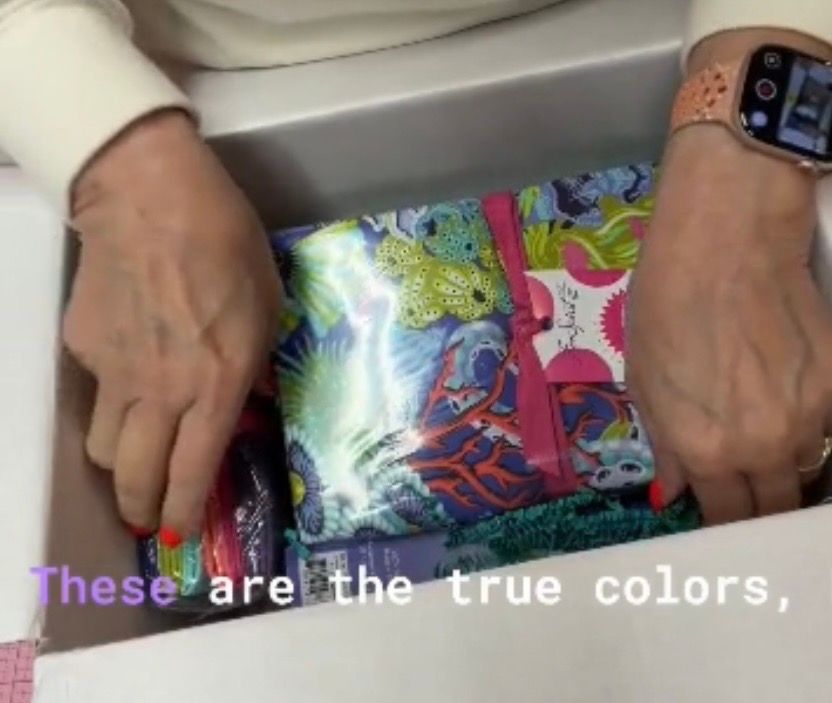
If you know me, you know that getting a package in the mail is my love language, especially when that package comes from Pink Door Fabrics! There is just something about that signature pink box that makes my heart skip a beat. Today, I’m unboxing the latest Pink Door Box subscription, and let me tell you, it is a total "Reef" of beauty. Are you ready to see the magic inside? Let’s dive in!

The Star of the Sea: Tula Pink’s Floral Reef

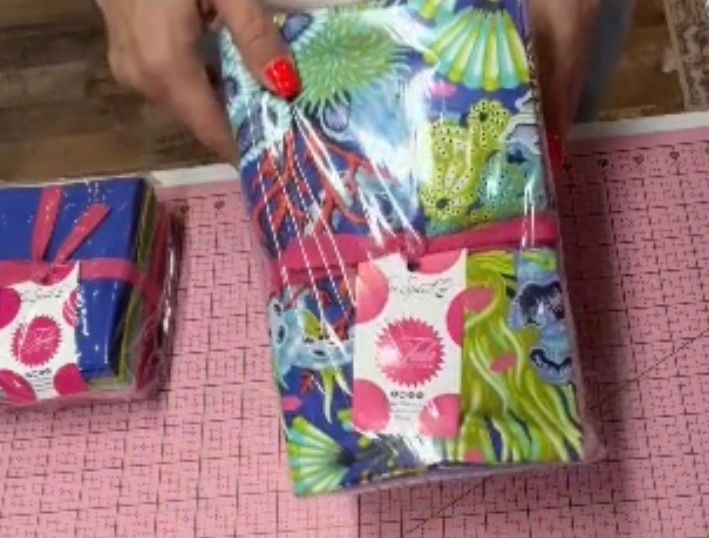
First things first, let’s talk about the main event: the fabric! This month’s half-yard bundle features the stunning Floral Reef collection by the one and only Tula Pink. Friends, the colors are just out of this world. We’re talking vibrant teals, deep purples, and the most delicious magentas you’ve ever seen.

Tula Pink Floral Reef Half Yard Bundle and True Colors

The prints are exactly what we love about Tula, whimsical, intricate, and slightly unexpected. You can really see the bundle spread out so beautifully, with those teals, purples, and pinks popping right away. There are sharks, seahorses, and ocean-inspired details tucked into the prints, and the mix of Floral Reef with coordinating True Colors fabrics makes the whole box feel beautifully curated and ready for your next project.

Tula Pink Floral Reef Fabrics

And wait until you see the vinyl! It’s called "Reef What You Sew," and you can really appreciate the shine and transparency here. It’s a clear vinyl with pink dots and playful ocean details layered over that gorgeous print. It is one of those supplies that instantly makes you start planning a bag project!

Patterns to Make You "Set Sail"

Inside the box, I also found two fantastic patterns that have my creative gears turning. The first is "Set Sail" by Jaybird Quilts. If you’ve been following my journey here at The Crafty Author, you know I love a good geometric challenge that looks way more complicated than it actually is. This pattern is perfect for showing off those bold Floral Reef prints.

The second pattern is from So Sweetness, and it’s a total game-changer for all my bag-making enthusiasts out there. Between the two, I honestly don't know where to start first. Are you joining the madness and starting a new project this week? Tell me I’m not the only one!

All the Notions and a Little Bit of Sparkle

A box from Pink Door isn't just about the fabric; it’s about the "extras" that make sewing so much fun. I was blown away by the quality of the notions this month.

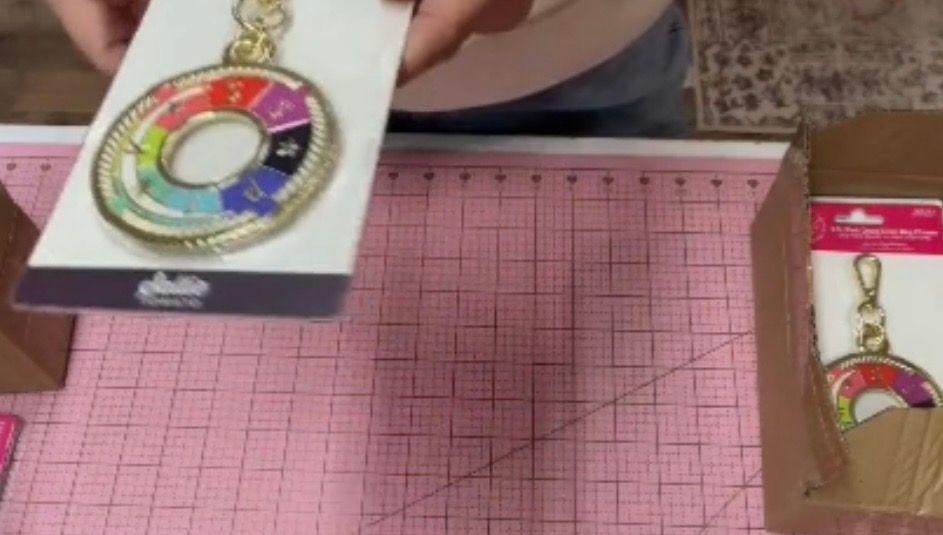
Pink anchor charm on pink cutting mat

We received:

  • Renaissance Ribbons: These are so luxurious and feature designs that match the collection perfectly.
  • Webbing: High-quality webbing that makes bag handles look professional and sturdy.
  • Zipper Sets: A whopping 3 yards of zipper tape and 9 pulls! I love having these on hand because I can cut them to the exact length I need for any project, like my quilt-as-you-go table runner.
  • Bag Charms: Oh my goodness, the charms! The anchor charms are such a fun little detail, and they are even cuter up close. The pink finish is playful and polished all at once, and they add that perfect pop of personality to a bag project.

Hands holding pink anchor charm keychain

And I can’t forget the whimsical touches, including the octopus playing cards, the cute scissors, and that special "SS Pink" charm that makes the whole box feel elevated.

Life Savor Tula Pink Bag Charm

It’s these little details that make the subscription feel like a monthly treat to myself.

A Real-Life Studio Moment (And a Little Dog Hair)

Now, I have to keep it real with you. As I was filming the unboxing, I realized that no matter how much I clean my studio, there is always a little bit of "extra love" floating around. Between Lola, Jack, and Petey, my three fur babies, dog hair is basically a permanent craft supply in this house!

If you see a stray hair on the fabric in the video, just know it’s a sign of a happy, lived-in home. My studio is my happy place, even when it’s a bit chaotic. Whether I'm working on a strip quilt series or just unboxing treats, I wouldn't have it any other way.

Watch the Full Unboxing!

I could talk about this fabric all day, but you really have to see it in motion to appreciate the shimmer, the scale of the prints, and the way the notions look on the pink mat. I’ve uploaded the full unboxing video so you can see every single item in detail.

https://youtu.be/jz7396wLxpE

"The best part of quilting isn't just the finished product; it's the excitement of the possibilities hidden inside a new stack of fabric."

What’s Coming Next?

I am already dreaming up some incredible kits using these Floral Reef fabrics. I’ll be teasing some of these designs in the The Crafty Author Clubhouse™ very soon, so make sure you’re part of our community to get the first look!

I am so incredibly inspired by this collection, and I hope it sparks a little bit of creativity in you, too. Life is too short for boring fabric, don't you think?

Stay crafty, and I'll see you in the next project!

Warmly,

Anisa
The Crafty Author


Shop Our Partners

Click the images below to shop our favorite supplies and brands!

Fat Quarter Shop Sewing Machines Plus AccuQuilt

From Tee to Treasure: Why T-Shirt Quilts are the New Graduation Tradition

May 11, 2026 By The Crafty Author

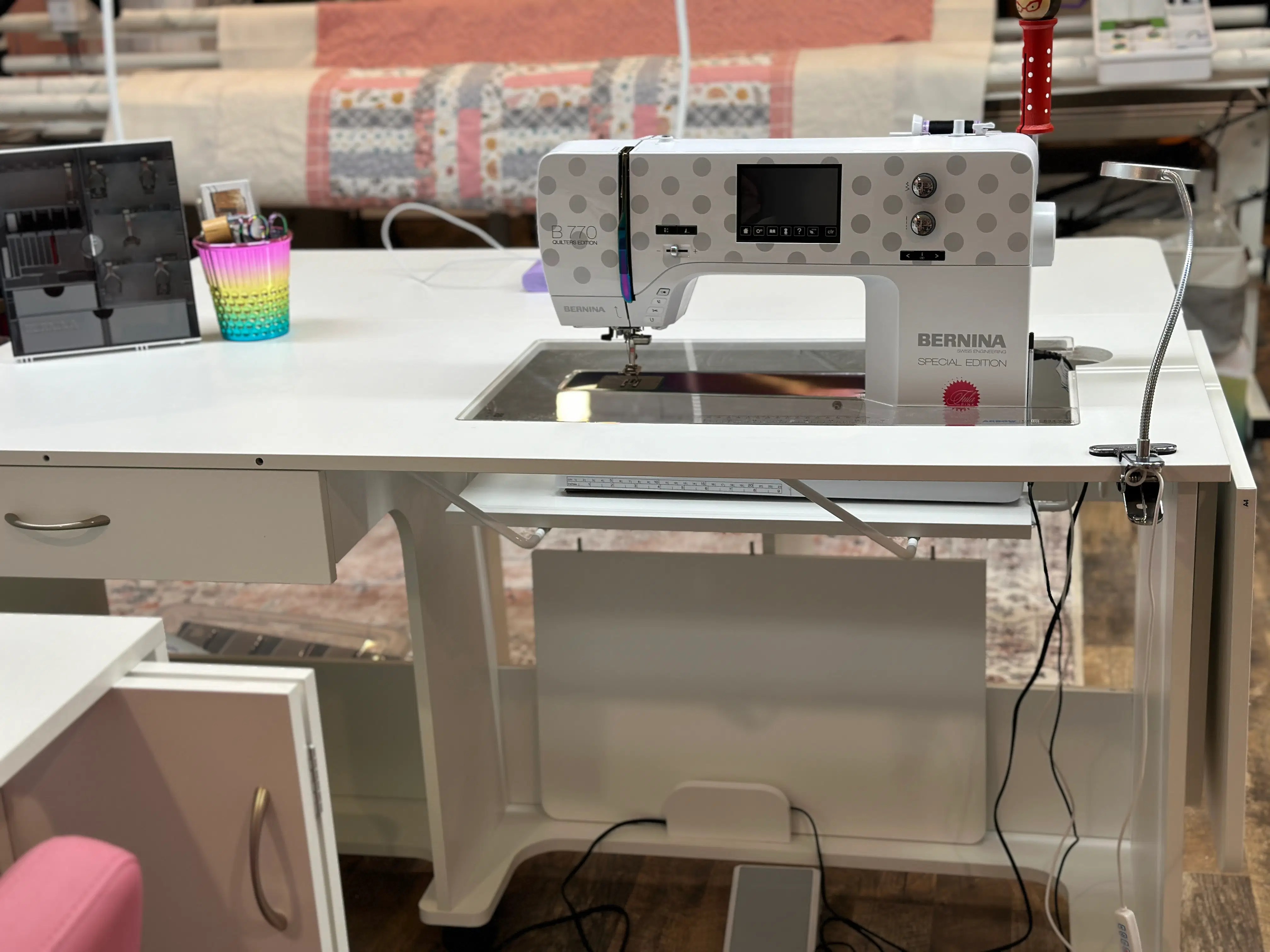
A professional Bernina sewing station in Anisa's studio with a colorful memory quilt draped in the background.

Hello friends! Can you believe it? Graduation season is officially upon us, and if you’re anything like me, you’re currently oscillating between “Aww, they’re growing up so fast!” and “Wait, where did all this stuff come from?!”

As a mama and a quilter with over 30 years under my belt, I’ve seen a lot of trends come and go, but there is one that has stolen my heart and refused to let go: The T-Shirt Quilt.

Are you joining the madness this year? If you have a senior in the house, you probably have a “drawer of doom.” You know the one. It’s overflowing with track meet shirts, theater production tees, that one neon-orange shirt from the 8th-grade field trip, and at least three shirts from clubs they were in for exactly two weeks.

Instead of letting those memories gather dust or, heaven forbid, donating them, why not turn them into The Quilted Tee? It’s the ultimate graduation tradition, and today, I’m sharing why these memory quilts are the absolute best gift you can give your graduate.

The Emotional "Hug" of a Memory Quilt

Let’s be real: heading off to college or starting a new career is terrifying. Your graduate is leaving the comfort of home for a tiny dorm room or a first apartment that probably smells a little bit like old sneakers.

A T-shirt quilt isn't just a blanket; it’s a portable hug. When they’re feeling homesick or stressed before a big exam, they can wrap themselves in a literal timeline of their accomplishments. I always say that quilting is just love made visible, and nowhere is that truer than with a memory quilt.

Every time I work on one of these projects in my studio, I find myself smiling at the stories the shirts tell. That 5K run they finished with their best friend? It’s there. The shirt from the school play where they had one line but gave it Oscar-level drama? It’s there too. It’s a visual history that says, “Look at everything you’ve done. You’ve got this!”

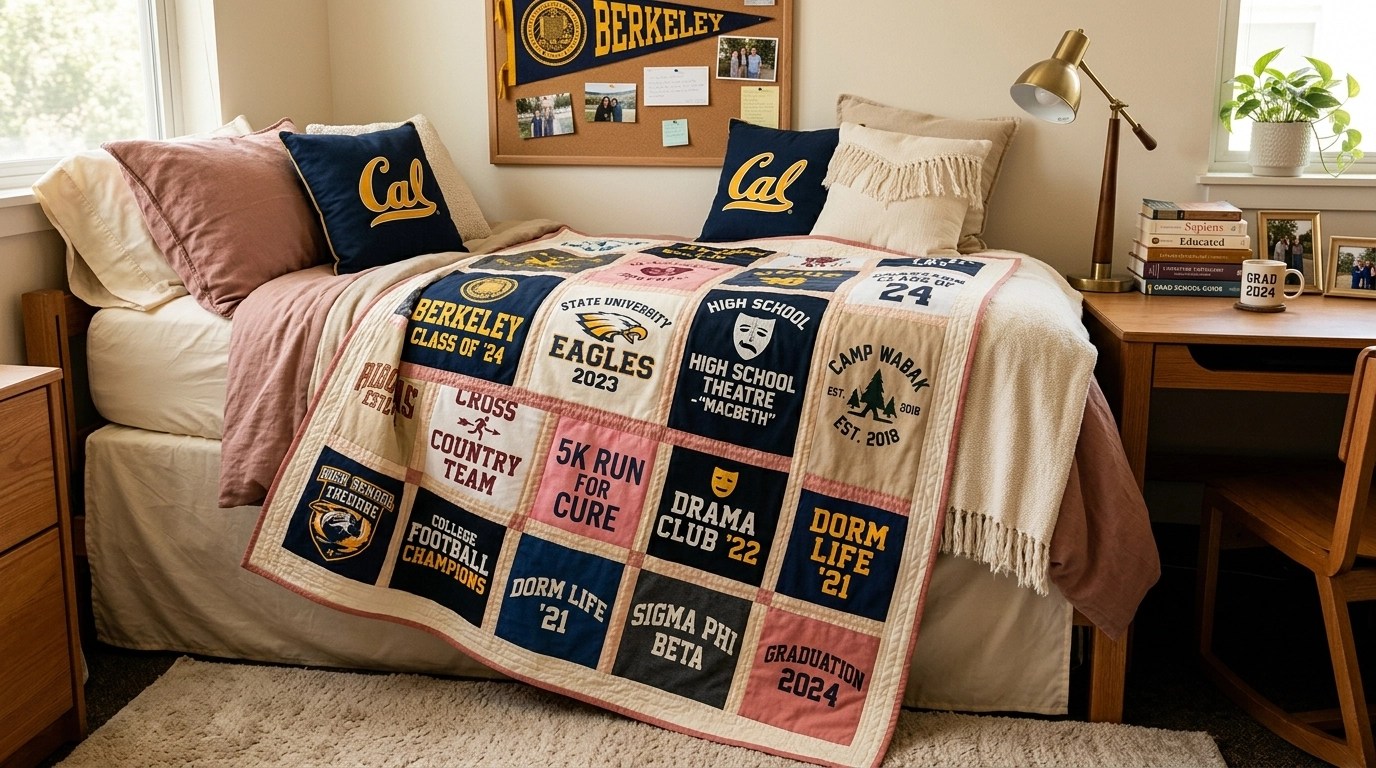
A warm lifestyle photo of a T-shirt memory quilt made from shirt logos displayed on a graduate's dorm bed with cozy decor and natural light.

Why T-Shirt Quilts are the New "Heirloom"

We used to think of heirlooms as fancy china or heavy wooden furniture. But let’s be honest: most 18-year-olds don't want a set of porcelain plates. They want something functional, cool, and meaningful.

T-shirt quilts have become the modern tradition because they bridge the gap between "sentimental keepsake" and "actually useful item." Plus, they are incredibly durable! When you use the right techniques, which I’m always thrilled to teach you over at The Crafty Author Clubhouse™ (COMING SOON!), these quilts can withstand the rigors of dorm life, laundry day, and beyond.

The Problem with the "Bin of Shirts"

I’ve talked to so many parents who say, “Oh, I have all their shirts in a plastic bin in the attic.” Friends, memories shouldn't live in a bin! T-shirts are notoriously difficult to store. They get yellowed, they take up a ton of space, and they’re basically just a snack for moths. By transforming them into a quilt, you’re preserving the fabric and the memory simultaneously.

Getting Started: It’s Easier Than You Think!

I know what you’re thinking. "Anisa, cutting into these shirts feels like performing surgery! What if I mess up?"

Take a deep breath. I’ve been there, and I promise you can do this. The key to a successful T-shirt quilt (or what I like to call "The Quilted Tee") is all in the preparation.

  1. Interface, Interface, Interface! T-shirts are stretchy. Quilting fabric is not. To keep your quilt from looking like a wavy mess, you must use a lightweight fusible interfacing on the back of every shirt. This stabilizes the knit fabric and makes it behave like a dream under your needle.
  2. Pick Your Layout. You don't have to just sew them in a boring grid! You can get creative with sashing, borders, or even a "mosaic" style where different sizes of shirt logos are fit together like a puzzle. If you’re looking for inspiration on how to piece things together, my About Me page shows some of the cozy, creative vibes we love here.
  3. Use the Right Tools. Trying to cut T-shirts with dull scissors is a recipe for frustration. A rotary cutter and a specialized cutting system make all the difference.

Studio photo of Anisa's Handi Quilter in a warm, organized creative sewing space.

Tips for a "Pro-Level" Graduation Quilt

If you want your graduate to actually use the quilt rather than just hang it on a wall, keep these tips in mind:

  • Choose a Soft Backing: Minky or a high-quality flannel makes the quilt extra cuddly. Perfect for those late-night study sessions!
  • Don't Forget the Label: This is the most important part! Include their name, graduation year, and a sweet message from you. Years from now, they’ll look at that label and remember exactly how much love went into every stitch.
  • Mix in Non-T-Shirts: Did they have a favorite flannel shirt or a pair of lucky socks? (Okay, maybe skip the socks). You can incorporate other fabrics to add texture and even more personality.

The Graduation Timeline: Don't Panic!

Are you staring at a pile of shirts and realizing graduation is only a few weeks away? Don't panic! While a full-sized quilt takes time, you can always start small. If you're really pressed for time, consider a quilted pillowcase made from their absolute favorite shirts.

However, if you want to tackle the full quilt, now is the time to start. I love the "Quilt As You Go" (QAYG) method for projects like this because it feels so much more manageable. If you haven't tried it yet, check out my Strip Quilt Series for some techniques that can definitely be adapted to your memory projects!

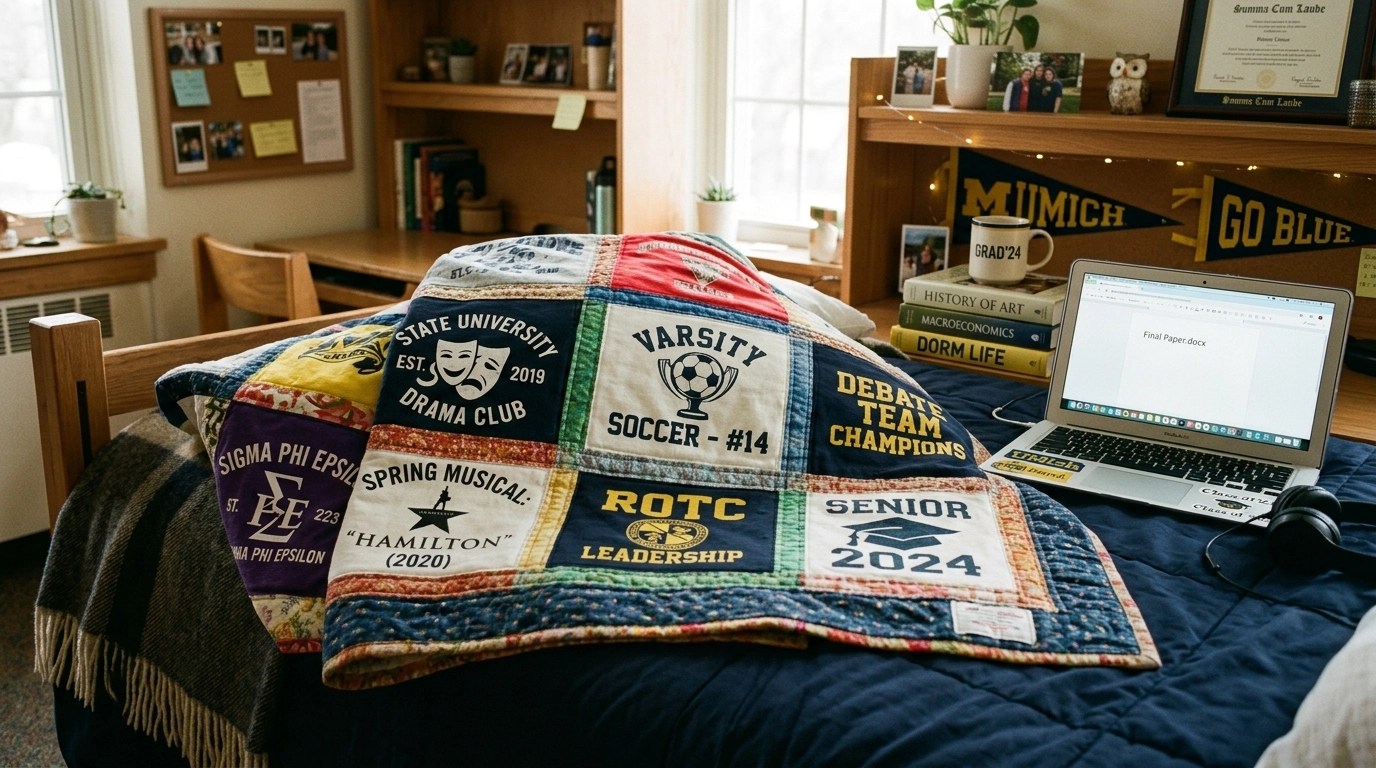
A close-up photo of a T-shirt quilt with school, sports, theater, and club shirt-logo blocks folded in a graduate's dorm room.

Why We Do What We Do

At the end of the day, we craft because we want to connect. Whether you’re a beginner who just bought your first machine or a seasoned pro, the goal is always the same: to create something beautiful that makes someone feel special.

Graduation is a huge milestone, not just for the kids, but for us too! It’s the end of one chapter and the beginning of another. Sending them off with a piece of their history, literally stitched together: is such a powerful way to celebrate that transition.

So, are you ready to dig through those closets and start your own "Tee to Treasure" journey? I am so excited to see what you create! If you need a little extra encouragement or a community to cheer you on, don't forget that The Crafty Author Clubhouse™ (COMING SOON!) is always open. We’d love to have you!

"A quilt will keep your body warm, but a T-shirt quilt will keep your heart warm too." : Anisa

Shop Our Partners

Ready to get started on your graduation project? Click the images below to shop my favorite tools and fabrics from the partners I trust!

Missouri Star Quilt Company Logo
Bernina Machine
Bernina B770 sewing machine

Happy stitching, friends! I can't wait to see your beautiful memory quilts.

Stay crafty,

Anisa 💖🧵✨

The Imperfection Manifesto: Why Your ‘Mistakes’ Are Your Maker’s Mark

May 9, 2026 By The Crafty Author

Anisa with a colorful handmade quilt in her cozy studio

Hello, friends! I am so thrilled that you’ve joined me today for the third installment of our Philosophy of the Stitch series.
If you’ve been following along, you know that we’ve been diving deep into the "why" behind our needles and thread. We’ve talked about the peace that comes from the process and the joy of choosing the perfect palette. But today, we’re going to talk about something a little more… messy.

We’re going to talk about mistakes.

Are you the kind of maker who reaches for the seam ripper the moment a corner doesn't align perfectly? Do you find yourself sighing over a wonky star or a stitch that went just a hair off-track? Trust me, I have been there! For years, I felt that if my quilts weren't "factory perfect," they weren't good enough. But over my 30 years of quilting, I’ve had a change of heart. I’ve realized that those little "imperfections" aren't actually flaws at all. They are your Maker’s Mark.

The Trap of the "Perfect" Quilt

We live in a world of mass production. You can walk into any big-box store and buy a quilt that has perfectly straight lines, perfectly uniform stitches, and perfectly symmetrical patterns. But do you know what those quilts are missing?

They’re missing a soul.

When everything is digitally programmed and laser-cut, the human element disappears. When we strive for that same level of robotic perfection in our own sewing rooms, we’re actually stripping away the very thing that makes handmade items so special. We get so caught up in the "should-bes" that we forget the "is."

I remember working on one of my early projects in my scrap quilt series. I was so focused on making every single scrap line up that I stopped having fun. I was stressed, my neck was tight, and I wasn't feeling creative, I was feeling like an inspector on an assembly line. That's not why we craft, is it? We craft to express ourselves!

The Thumbprint of the Maker

Think of your "mistakes" as a thumbprint. No two people have the same thumbprint, and no two makers have the same "flaws." When I look at a quilt I made twenty years ago, I don't see the missed corner as a failure. I see it as a snapshot of who I was at that moment. Maybe I was rushing because I was excited to see the finished product. Maybe I was distracted because one of my kids was telling me a story.

Maker's Mark Stitch

That little wonky stitch is proof that a living, breathing human being sat at a machine, perhaps my favorite Bernina or my trusty Handi Quilter, and poured their time and love into that fabric. It’s the "human-ness" of the piece.

"Your imperfections are not errors; they are the evidence of your presence in the work."

When you give a quilt as a gift, the recipient isn't looking for a 1/4 inch seam that is accurate to the millimeter. They are looking at the colors you chose, the softness of the batting, and the warmth it provides. They see the love. And years from now, when that quilt is being passed down, those little unique markers will be how your grandchildren know it was yours.

Lessons from the "Humility Block"

There is a wonderful legend in the quilting world about the "Amish Mistake." You might have heard it, the idea that Amish quilters would intentionally place one "wrong" block or a mismatched fabric in their quilts because "only God is perfect." While historians have mostly debunked this as a myth, the sentiment remains powerful.

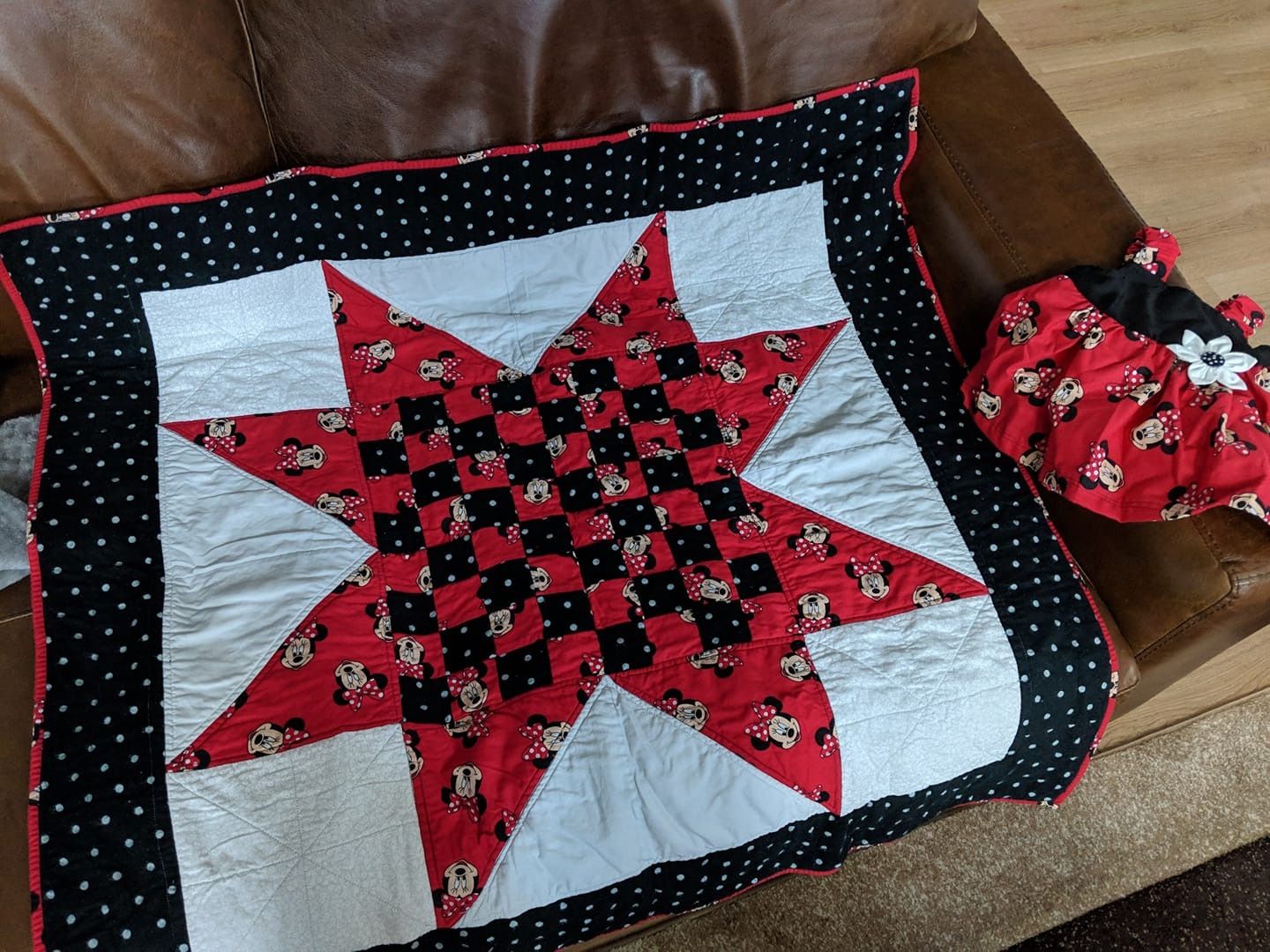
We don't need to be perfect to be worthy. In fact, our imperfections are what make us relatable and real. Whether you’re making a Minnie Mouse baby quilt or a complex heirloom piece, the goal is completion and connection, not perfection.

Minnie Mouse Baby Quilt

Why Heirlooms Are Perfectly Imperfect

Have you ever visited an antique shop and looked at the quilts from the 1800s? Many of them have mismatched dyes, uneven hand-quilting, and blocks that don't quite square up. And yet, they are breathtaking. We call them "treasures." We don't look at a 150-year-old quilt and say, "Oh, look at that poor tension." We say, "Look at the incredible work this woman did with what she had."

Your projects are the heirlooms of tomorrow. When you embrace the "perfectly imperfect" nature of your work, you’re creating something that feels approachable. A quilt that is too perfect can sometimes feel cold, like you’re afraid to use it. But a quilt with a little character? That’s a quilt that begs to be snuggled under on a rainy Sunday afternoon.

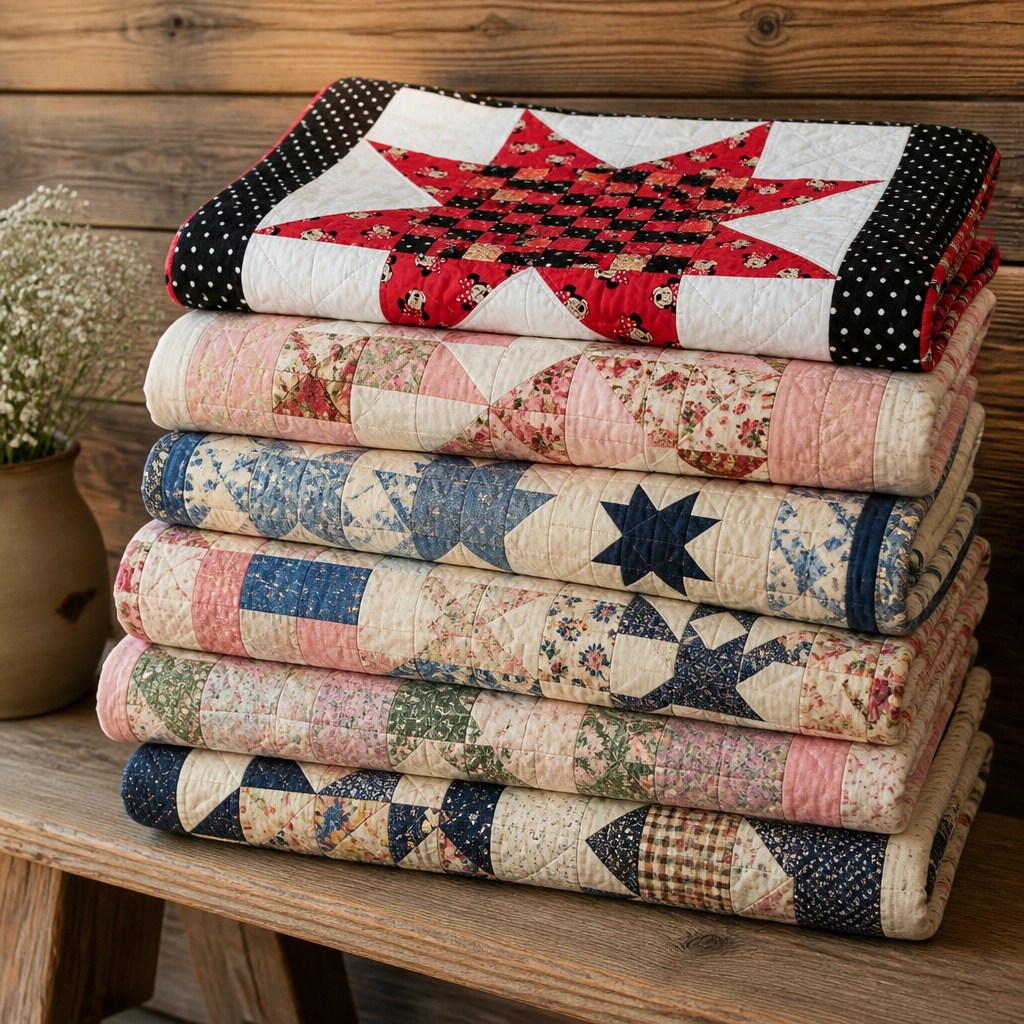
Stack of Quilts

If you’re just starting out, please don't let the fear of making a mistake stop you from beginning. I always tell my beginners that an unfinished project is the only "mistake" you can truly make. If you finish it, it's a success! If you want a lower-pressure way to start, I highly recommend trying an easy rag quilt. The frayed edges are supposed to look a little wild, which is the perfect antidote to perfectionism!

Celebrating the Journey in the Clubhouse

This is exactly why I created The Crafty Author Clubhouse™ (COMING SOON!). I wanted a space where we could move away from the "quilt police" mentality and move toward a culture of encouragement. In the Clubhouse, we celebrate the "oops" moments just as much as the "aha" moments.

The Crafty Author Clubhouse

We share our wonky stars and our bobbin tangles because that is where the real learning happens. We’re not just making quilts; we’re building confidence. We’re learning to trust our hands and our hearts. If you’ve been feeling a little stuck or worried that your work isn't "good enough," just know this encouraging space is on the way. We will show you that your Maker’s Mark is something to be proud of!

The Imperfection Manifesto

So, are you ready to join the madness? Are you ready to put down the seam ripper and pick up the pace? Here is my challenge to you:

  1. Release the "Shoulds": Stop comparing your work to a computer-generated image.
  2. Keep the Character: If a mistake doesn't affect the structural integrity of the quilt, leave it. It’s part of the story.
  3. Date Your Work: Always sign your quilts. That "Maker’s Mark" is your legacy.
  4. Find Joy in the Doing: If you’re not smiling, you’re trying too hard for perfection.

Remember, my friends, a quilt is a hug made of fabric. And hugs aren't supposed to be stiff or perfectly symmetrical: they’re supposed to be warm, soft, and full of heart.

I am so proud of the beautiful, unique things you are creating. Keep stitching, keep dreaming, and most importantly, keep being you.

Shop Our Partners

Affiliate disclosure: I may earn a small commission at no extra cost to you.

Missouri Star Quilt Company Fat Quarter Shop

Shop Missouri Star Quilt Company
Shop Fat Quarter Shop

Thank you for being part of this journey with me. I can't wait to see your "perfectly imperfect" masterpieces!

Keep on craftin',

Anisa
The Crafty Author

7 Mistakes You’re Making with T-Shirt Quilts (And How to Fix Them)

May 8, 2026 By The Crafty Author

Anisa in her studio at The Crafty Author.

Hello, friends!

With graduation season just around the corner, I know so many of you are staring at a growing pile of high school sports jerseys, concert tees, and "Class of" shirts, wondering how on earth you're going to turn them into a masterpiece. Believe me, I’ve been there! There is something so incredibly special about a T-shirt quilt. It’s more than just a blanket; it’s a giant, cozy hug made of memories.

But let’s be real for a second: T-shirts are stretchy. They’re slippery. They have weird logos that don't want to play nice with your sewing machine. In my 30+ years of quilting, I’ve seen these common mistakes show up again and again in my studio, and I want to help you avoid them from the start!

If you’re feeling a little overwhelmed, take a deep breath. We’re going to walk through the seven most common mistakes beginners make when creating T-shirt quilts and, more importantly, exactly how to fix them. Are you ready to turn those tees into treasures? Let’s dive in!


1. Skipping the Stabilizer (The "Wobbly Quilt" Syndrome)

If I could only give you one piece of advice, it would be this: Do not skip the stabilizer.

T-shirts are made of knit fabric, which is designed to stretch so we can wear them comfortably. However, in the quilting world, "stretch" is often a four-letter word! If you try to sew a stretchy T-shirt block to a non-stretchy cotton sashing, your machine will pull the fabric, and you’ll end up with puckers, wavy seams, and a quilt that won't lay flat.

The Fix: Use a lightweight, fusible (iron-on) interfacing. I love a good woven or non-woven featherweight stabilizer. You want something that stops the stretch but doesn't make the quilt feel like a piece of cardboard. Simply iron it onto the back of your T-shirt before you do your final cutting. It turns that tricky knit into a stable fabric that behaves just like regular quilting cotton.

Anisa's actual polka-dot Bernina in her sewing corner stitching a stabilized T-shirt quilt block in her studio.
Using your actual sewing machine setup makes this step feel even more familiar and approachable!

2. Cutting Your Blocks Too Small

I see this all the time in my studio: someone gets so excited to start that they grab their scissors and cut right around the logo. But wait! You need to account for seam allowances. If the logo is 12 inches wide and you cut the block at 12 inches, you’re going to lose the edges of that beautiful design when you sew it into the quilt.

The Fix: Always leave at least 1 to 2 inches of "buffer" space around the graphic. If you want a 12-inch finished block, you should be cutting at least a 12.5-inch square. I actually prefer to cut my stabilized blocks slightly larger than I need and then trim them down to the perfect size later. It gives you so much more wiggle room!

3. Not Squaring Up Your Blocks

Precision is your best friend in quilting. If your blocks are even a quarter-inch off, by the time you get to the end of a row, your quilt will be lopsided. Many beginners try to "eyeball" it, but knit fabric is notoriously deceptive.

The Fix: Invest in a large square acrylic ruler (12.5" or 15" are great sizes for T-shirt quilts). After you've applied your stabilizer, use a rotary cutter and your ruler to "square up" every single block. This ensures that every corner is a perfect 90-degree angle. When your blocks are square, they fit together like a dream, and your rows will be straight as an arrow!

Studio close-up of a T-shirt quilt block being squared up with a ruler and rotary cutter in Anisa's sewing space.

4. Forcing a "One Size Fits All" Layout

We’ve all seen those T-shirt quilts that look like a perfect checkerboard. They’re classic! But what happens when you have a tiny pocket logo and a massive "State Championship" graphic that takes up the whole shirt? If you force them all into 12-inch squares, you’re either going to have a ton of empty space on the small ones or you’re going to cut off the big ones.

The Fix: Don't be afraid of a "puzzle" or "variable" layout! You can have different sized blocks in the same quilt. You can even add borders (sashing) around smaller blocks to make them match the size of the larger ones. It adds so much visual interest and ensures every memory is showcased perfectly.

"Your quilt should tell a story, and sometimes stories come in different shapes and sizes. Embrace the variety!"

5. Using the Wrong Needle

If you’ve ever had your machine skip stitches or leave little holes in your fabric, you might be using the wrong needle. A standard "Universal" needle is great for many things, but T-shirts (even stabilized ones) can be picky.

The Fix: Switch to a Ballpoint or Jersey needle. These needles have a slightly rounded tip that pushes the fabric fibers aside rather than piercing and breaking them. This prevents those pesky "runs" in the knit fabric and keeps your stitches looking professional and clean.

6. Quilting Directly Over Thick Logos

This is a heartbreak I want to help you avoid! Some T-shirts have thick, rubbery, or plastic-like screen printing. If you try to run your quilting needle directly through that thick plastic, your thread is likely to snap, or worse, your needle could break.

The Fix: Plan your quilting design to go around the logos. If you're doing a simple stipple or meander pattern, just "echo" the shape of the graphic. This leaves the logo flat and prominent while still securing the layers of the quilt together. If you're using a longarm or an embroidery machine, like the ones we use in my studio, you can easily program the path to skip those dense areas.

Anisa's actual polka-dot Bernina quilting a finished T-shirt quilt in her cozy sewing corner.

7. Using Low-Quality Backing and Batting

After all the hard work you put into the front, don't skimp on the back! This is one of those costly mistakes I’ve seen too many times in my studio—beautiful quilts ruined because the backing fabric bled in the wash or the batting wadded up after one trip to the dryer.

The Fix: Always use high-quality, 100% cotton quilting fabric for your backing and sashing. For the batting, I highly recommend an 80/20 cotton-poly blend or 100% cotton. Avoid those thick, high-loft polyester battings: they can be very difficult to quilt through when you’re already dealing with multiple layers of T-shirt and stabilizer.


Ready to take the next step?

Making a T-shirt quilt is such a rewarding journey, and I want you to feel confident every step of the way! If you want more hands-on guidance, come join the waitlist for The Crafty Author Clubhouse™ (COMING SOON!). It’s going to be a wonderful community where we’ll share exclusive tutorials, sew-alongs, and all the tips I’ve gathered over 30 years. We’d love to have you!

You might also find my Strip Quilt Series helpful if you're looking for different ways to piece your projects together.

Are you joining the madness and starting a graduation quilt this week? I want to hear about it! Leave a comment below or tag me on social media with your progress.

Happy stitching, friends!

Keep on craftin',

Anisa


Shop Our Partners

Click the images below to shop.

AccuQuilt Cutting System
Brother sewing machine

  • « Go to Previous Page
  • Page 1
  • Page 2
  • Page 3
  • Page 4
  • Page 5
  • Interim pages omitted …
  • Page 20
  • Go to Next Page »

Primary Sidebar

FOLLOW ME ON SOCIAL MEDIA

  • Facebook
  • Twitter
  • Instagram
  • Pinterest
  • YouTube

Find quilting fabric and quilting supplies for your project at Fat Quarter Shop

SUBSCRIBE TO MY BLOG POSTS

SEARCH PAST PROJECTS BY DATE

SEARCH FOR PROJECTS BY NAME

Privacy & Cookies: This site uses cookies. By continuing to use this website, you agree to their use.

To find out more, including how to control cookies, see here: Cookie Policy
  • HOME
  • BLOG
  • QUILT SERIES
  • THE CRAFTY AUTHOR™ CLUBHOUSE
  • SHOP THE QUILTED TEE
Copyright © 2026 Crafty Author